by Laura Rowley
Originally posted on Sunday, October 31, 2010, 12:00AM
Like many Americans, Leah West, 40, is struggling to shed debt and manage an array of financial obligations. After her divorce seven years ago, Leah, a mother of three, enrolled in college and earned her bachelor's and master's degrees. She moved up the ladder in health care administration, and earns about $80,000. But she's now saddled with more than $82,000 in debt, mostly student loans; and her home is worth less than what she paid it. Leah also wants to set aside money for college tuition for her kids, and build a retirement fund.
Since September, I've been coaching Leah in her quest to improve her finances, a journey she blogs about at WomansDay.com. Her story offers practical lessons in how to attack multiple financial goals and maintain momentum. Here are just a few:
1) Focus on the positive
Before you confront a mountain of bills, remind yourself what's working for you. Leah had earned a master's degree — an accomplishment just 6 percent of Americans can claim. She enjoys her job, has a solid income and excellent insurance coverage. She is in good health, has three wonderful kids, and can cover all her bills without falling further into the red. Relationships, education, career experience, health and spirituality are all components of well-being; savoring the positive can provide the momentum to tackle the bad stuff.
2) Set one to three manageable goals
Don't overwhelm yourself with a list of ten things to fix immediately. Leah's priorities were eliminating her credit card debt; creating a plan to pay off her student loans (which were in forbearance); and building up an emergency fund of $10,000. Once we had a strategy up and running, we could move on to other goals, such as college savings and retirement.
3) Get a handle on the real numbers
Although Leah was making double the minimum payment on her credit cards, she felt she wasn't making progress. I used an online debt calculator to show her the truth: By paying twice the minimum, she would banish the debt in 15 months and pay $302 in interest. If she made only the minimum payments, it would take more than six years, and she'd pay $1,328 in interest. Use tools like this one to help you get a grip on the math.
Leah also got the hard numbers on her student loan debt to make sure the loans weren't snowballing at absurdly high interest rates, and disrupting the rest of her financial plan. Fortunately, the rates were quite low, so we left that alone for the moment to focus on the debt paydown. (That would free up the cash necessary to eventually tackle the student debt.)
Finally, we discussed Leah's retirement plan. She had enrolled in a 403(b) plan when she started her job at a health center and contributed steadily for four years. But about 18 months ago, her employer eliminated matching funds because of budget cuts, so Leah stopped contributing. The health center is expected to reinstate the match next year, and Leah plans to jump back in then. It's a smart move from a numbers perspective: It's better to pay down credit card debt at 20 percent interest than to contribute to a plan with no match, because she's unlikely to earn a 20 percent return on her retirement savings.
4) Rank your rates, then cut them down
Leah listed her credit cards on a single page from highest to lowest interest rate, along with the amount due and the company contact information. She called each lender and asked for a rate reduction, using this script: "I have been a cardholder since ____. In the past few months, several credit card companies have offered me lower rates than my current rate with you. I value our relationship, but would like you to match the other offers that I have received and reduce my interest rate by 10 percent. Are you authorized to adjust my interest rate?" (If they say no, ask politely to speak to someone who can and repeat the request.)
Although it took several hours of phone hassles, Leah cut her interest rate by 13.5 percentage points across three cards. Savings: About $275.
5) Snowball it down
When we started, Leah had four months left on her car payment. Once that debt is paid off, she'll direct the money to the highest-interest credit card. Similarly, when that's paid off, the money will be targeted (with her car payment) to the next credit card until they're all completely paid off. Then that giant snowball of cash will be used to pay off her student loans. The key is to keep the money out of her daily budget, so she doesn't use it to boost her lifestyle.
6) Track spending to the penny
Leah began looking for ways to reduce her monthly expenses, and thinking about her choices in a value-oriented way. For instance, she could move from her home on Cape Cod to a cheaper suburb of Boston, but she values living on the beach. On the other hand, Leah realized she was dropping about $400 a month at a corner convenience store, on non-essentials like deli sandwiches and homemade ice cream. She's eliminated those indulgences, dropped a gym membership she barely used and found ways to save on her cable and auto insurance. The idea is to cut where she can so she can spend on what she values most. The only way to do that is to know where every penny goes.
7) Look at ways to increase your cash flow
Leah usually gets a tax refund in April of more than $1,000. She spoke with an accountant about changing her withholding at work to get more cash in each paycheck (and no refund in April, because that's giving Uncle Sam an interest-free loan for a year). The accountant ultimately advised against it for now, but she'll revisit the idea next year. More importantly, she increased her income by working freelance on her blog. Those extra paychecks are earmarked to pay off her debt and build an emergency fund of $10,000.
8) Keep a gratitude journal to stay motivated
Leah started a journal right after her divorce, when she was overwhelmed and frightened about the future. She returned to it recently when she hit a financial setback — her partner of more than two years moved out, and took all of the living room furniture with him. (She bought a few basic pieces so the kids wouldn't have to sit on the floor.) The journal reminded Leah of how far she's come, and helped her find the energy and patience to keep moving forward.
Tuesday, April 12, 2011


Friday, March 4, 2011
25 common ways people waste money
Plug your financial leaks, and pocket the savings.
Has your budget sprung a leak?
Nearly everyone has spending holes. And as with other kinds of leaks, you may have hardly noticed them. But those small drips can quickly add up to big bucks. The trick is to find the holes and plug them so you can keep more money in your pocket. That extra cash could be the ticket to finally being able to save, invest, or break your cycle of living from paycheck to paycheck.
From Kiplinger.com
See if any of these sound familiar, then look for ways to plug your own leaks:
1. Carrying a balance. Debt is a shackle that holds you back. For instance, if you have a $1,000 balance on a credit card that charges an 18% rate, you blow $180 every year on interest. Get in the habit of paying off your balance in full each month.
2. Overspending on gas and oil for your car. There's no need to spring for premium fuel if the manufacturer says regular is just fine. You should also check to make sure your tires are optimally inflated to get the best gas mileage. And are you still paying for an oil change every 3,000 miles? Many models nowadays can last 5,000 to 7,000 miles between changes, and some even have built-in sensors to tell you when it's time to change the oil. Check your manual to find the best time for your car's routine maintenance.
3. Keeping unhealthy habits. Smoking costs a lot more than just what you pay for a pack of cigarettes. It significantly increases the cost of life and health insurance. And you'll pay more for homeowners and auto insurance. Add in various other expenses, and the true cost of smoking adds up dramatically over a lifetime -- $86,000 for a 24-year-old woman over a lifetime and $183,000 for a 24-year-old man over a lifetime, according to "The Price of Smoking" (The MIT Press).
Another habit to quit: indoor tanning. There is now a 10% tax on indoor tanning services. As with cigarettes, the true cost of tanning -- which the World Health Organization lists among the worst-known carcinogens -- is higher than just the price you pay each time you go to the salon.
4. Using a cell phone that doesn't fit. How many people do you know who have spent hundreds of dollars on fancy phones, and then pay hundreds of dollars every month for the privilege of using them? Your phone is not a status symbol. It is a way to communicate. Many people pay too much for cell phone contracts and don't use all their minutes. Go to BillShrink.com or Validas.com to evaluate your usage and see if you can find a plan that fits you better. Or consider a prepaid cell phone. Compare rates at MyRatePlan.com.
5. Buying brand-name instead of generic. From groceries to clothing to prescription drugs, you could save money by choosing the off-brand over the fancy label. And in many cases, you won't sacrifice much in quality. Clever advertising and fancy packaging don't make brand-name products better than lesser-known brands.
6. Keeping your mouth shut. No one wants to be a nuisance. But by simply asking, you may be able to snag a lower rate on your credit card.
When shopping, watch for price discrepancies at the cash register, and make a habit of asking, "Do you have a coupon for this?" You might even be able to haggle for a lower price, especially on seasonal or perishable items, floor models or big-ticket purchases. Many stores will also match or beat their competitors' prices if you speak up. And try asking for a discount if you pay cash or debit -- this saves the store the cut it has to pay the credit-card company, so it may be willing to give you a deal. It doesn't hurt to ask.
7. Buying beverages one at a time. If you're in the habit of buying bottled water, coffee-by-the-cup or vending-machine soda, your budget has sprung a leak. Instead, drink tap water or use a water filter. Brew a homemade cuppa joe. Buy your soda in bulk and bring it to work. (Better yet, skip the soda in favor of something healthier.)
8. Paying for something you can get for free. There's a boatload of freebies for the taking, if you know where to look. Some of our favorites include restaurant meals for kids, credit reports, software programs, prescription drugs and tech support. You can also help yourself to all the books, music and movies your heart desires at your local library for free (or dirt cheap).
9. Stashing your money with Uncle Sam rather than in an interest-earning account. If you get a tax refund each April, you let the government take too much money in taxes from your paycheck all year long. Get that money back in your pocket this year -- and put it to work for you -- by adjusting your tax withholding. You can file a new Form W-4 with your employer at any time.
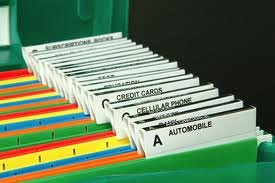
10. Being disorganized. It pays to get your financial house in order. Lost bills and receipts, forgotten tax deductions, and clueless spending can cost you hundreds of dollars each year. Start by setting up automatic bill payment online for your monthly bills to eliminate late fees and postage costs. Then get a handful of files to organize important receipts, insurance policies, tax documents and other statements.
Finally, consider using free budgeting software such as Mint.com to see exactly where your money goes, making it much harder for you to lose track of it.
11. Letting your money wallow in a low-interest account. You work hard for your money. Shouldn't it work hard for you too? If you're stashing your cash in a traditional savings account earning next-to-nothing, you're wasting it. Make sure you're getting the best return on your money. Search for the highest yields on CDs and money-market savings accounts. And consider using a free online checking account that pays interest, such as ones offered by Everbank and ING Direct.
Your stocks and mutual funds should be working hard for you, too. If they've been lagging behind their peers for too long, it could be time to say goodbye. Learn how to spot a wallowing fund or stock.
12. Paying late fees and missing deadlines. Return those library books and movie rentals on time. Mail in those rebates. Submit expense reports on time for reimbursement. And if you make a bad purchase, don't just stuff it in the back of the closet and hope it goes away. Get off your duff, return it and get your money back before you lose the receipt.
13. Paying ATM fees. Expect to throw away nearly $4 every time you use an ATM that isn't in your bank's network. That's because you'll pay an ATM surcharge, and your own bank will hit you with a non-network fee. Consider switching to a bank, such as Ally Bank, that doesn't charge ATM fees and reimburses you for fees other banks charge. Another way to avoid fees if there's not an ATM in your bank's network nearby is to get cash back when you make a purchase at the grocery store or drugstore.
14. Shopping at the grocery store without a calculator. Check how much an item costs per ounce, pound or other unit of measurement. When you comparison-shop by unit price, you save. For example, if a pack of 40 diapers costs $13, that's 33 cents per diaper. But if you buy a box of 144 diapers for $35, that's 24 cents per diaper. You save 27%! (Of course, buying more of something only saves money if you use it all. If you end up throwing much out, you wasted money.)
15. Paying for things you don't use. Do you watch all those cable channels? Do you need those extra features on your phone? Are you getting your money's worth out of your gym membership? Are you taking full advantage of your Netflix, TiVo and magazine subscriptions? Take a look at what your family actually uses, then trim accordingly.
16. Not reading the fine print. Thought you were being smart by transferring the balance on a high-rate credit card to a low-rate one? Did you read the fine print, though? Some credit-card companies now charge up to 5% for balance transfers. Also watch out for free checking accounts that aren't so free. Some banks are starting to charge fees unless you meet certain criteria.
17. Mismanaging your flexible spending account. For some people, that means failing to take advantage of their workplace FSA, which lets employees set aside pre-tax dollars for out-of-pocket medical costs. Other people fail to submit receipts on time. And the average worker leaves $86 behind in his or her use-it-or-lose-it FSA account each year, according to WageWorks, an employee benefits provider.
18. Being an inflexible traveler. You'll save a lot of money on travel if you're willing to be flexible. Consider traveling before or after peak season when prices are lower. Or search for flights over a range of dates to find the lowest fare. Booking at the last minute also can save you money because hotels and airlines slash prices to fill rooms and planes. And flexibility pays off at blind-booking sites, such as Priceline or Hotwire, which offer deep discounts if you're willing to book a room or flight without knowing which hotel or airline (or other details about the flight) you're getting until you pay.
19. Sticking with the same service plans and the same service providers year after year. Hey, we're all for loyalty to trusted service providers, such as your bank, insurer, credit-card company, mutual fund, phone plan or cable plan. But over time, as prices and your circumstances change, the status-quo may not be the best deal any more. Smart consumers are always on the lookout for bargains.
20. Making impulse purchases. When you buy before you think, you don't give yourself time to shop around for the best price. Take the time to compare prices online, read product reviews and look for coupons when appropriate.
Make it a policy to give yourself a cooling-off period in case you're ever tempted to make an impulse purchase. Go home and sleep on the decision. More often than not, you'll decide you don't need the item after all.
21. Dining out frequently. Spending $10, $20, $30 per person for dinner can be a huge drain on your wallet. Throw in a $6 sandwich for lunch every day and you've got quite a leak. Learning to cook and bringing your lunch from home can save a couple hundred bucks each month. When you do go out, consider getting carry-out instead of dining in (you'll save on the tip and drink), skip the overpriced appetizer and dessert, and search the Web for coupons ahead of time.
22. Trying to time the stock market. In trying to buy low and sell high, many people actually do the opposite. Instead, employ the simple strategy of "dollar-cost-averaging." By investing a fixed dollar amount at regular intervals, you smooth out the ups and downs of the market over time. If you take out the emotion and guesswork, investing can become less stressful, less wasteful and more successful.
23. Buying insurance you don't need. You only need life insurance if someone is financially dependent upon you, such as a child. That means most singles, seniors or kids don't need a policy. Other policies you can probably do without include credit-card insurance (better to use the premium to pay down your debt in the first place), rental-car insurance (most auto policies and credit cards carry some coverage), mortgage life insurance and accidental-death insurance (a regular term-life insurance policy will do the trick).
24. Buying new instead of used. Talk about a spending leak -- or, rather, a gush. Cars lose 20% of their value the moment they're driven off the lot and 65% in the first five years. Used models can be a real value because you can get a car that's still in fine working order for a fraction of the new-car price. And you'll pay less in collision insurance and taxes, too.
Cars aren't the only things worth buying used. Consider the savings on pre-owned books, toys, exercise equipment, children's clothing and furniture. (Of course, there are some things you're better off buying new, including mattresses, laptops, linens, shoes and safety equipment, such as car seats and bike helmets.)
25. Procrastinating. Time is an asset money can't buy. Start investing for retirement as soon as possible. For instance, if a 40-year-old saves $300 a month with an 8% return per year, he'll have $287,000 by age 65. If he had started saving 15 years earlier at age 25, he'd have more than $1 million.
Has your budget sprung a leak?
Nearly everyone has spending holes. And as with other kinds of leaks, you may have hardly noticed them. But those small drips can quickly add up to big bucks. The trick is to find the holes and plug them so you can keep more money in your pocket. That extra cash could be the ticket to finally being able to save, invest, or break your cycle of living from paycheck to paycheck.
From Kiplinger.com
See if any of these sound familiar, then look for ways to plug your own leaks:
1. Carrying a balance. Debt is a shackle that holds you back. For instance, if you have a $1,000 balance on a credit card that charges an 18% rate, you blow $180 every year on interest. Get in the habit of paying off your balance in full each month.
2. Overspending on gas and oil for your car. There's no need to spring for premium fuel if the manufacturer says regular is just fine. You should also check to make sure your tires are optimally inflated to get the best gas mileage. And are you still paying for an oil change every 3,000 miles? Many models nowadays can last 5,000 to 7,000 miles between changes, and some even have built-in sensors to tell you when it's time to change the oil. Check your manual to find the best time for your car's routine maintenance.
3. Keeping unhealthy habits. Smoking costs a lot more than just what you pay for a pack of cigarettes. It significantly increases the cost of life and health insurance. And you'll pay more for homeowners and auto insurance. Add in various other expenses, and the true cost of smoking adds up dramatically over a lifetime -- $86,000 for a 24-year-old woman over a lifetime and $183,000 for a 24-year-old man over a lifetime, according to "The Price of Smoking" (The MIT Press).
Another habit to quit: indoor tanning. There is now a 10% tax on indoor tanning services. As with cigarettes, the true cost of tanning -- which the World Health Organization lists among the worst-known carcinogens -- is higher than just the price you pay each time you go to the salon.
4. Using a cell phone that doesn't fit. How many people do you know who have spent hundreds of dollars on fancy phones, and then pay hundreds of dollars every month for the privilege of using them? Your phone is not a status symbol. It is a way to communicate. Many people pay too much for cell phone contracts and don't use all their minutes. Go to BillShrink.com or Validas.com to evaluate your usage and see if you can find a plan that fits you better. Or consider a prepaid cell phone. Compare rates at MyRatePlan.com.
5. Buying brand-name instead of generic. From groceries to clothing to prescription drugs, you could save money by choosing the off-brand over the fancy label. And in many cases, you won't sacrifice much in quality. Clever advertising and fancy packaging don't make brand-name products better than lesser-known brands.
6. Keeping your mouth shut. No one wants to be a nuisance. But by simply asking, you may be able to snag a lower rate on your credit card.
When shopping, watch for price discrepancies at the cash register, and make a habit of asking, "Do you have a coupon for this?" You might even be able to haggle for a lower price, especially on seasonal or perishable items, floor models or big-ticket purchases. Many stores will also match or beat their competitors' prices if you speak up. And try asking for a discount if you pay cash or debit -- this saves the store the cut it has to pay the credit-card company, so it may be willing to give you a deal. It doesn't hurt to ask.
7. Buying beverages one at a time. If you're in the habit of buying bottled water, coffee-by-the-cup or vending-machine soda, your budget has sprung a leak. Instead, drink tap water or use a water filter. Brew a homemade cuppa joe. Buy your soda in bulk and bring it to work. (Better yet, skip the soda in favor of something healthier.)
8. Paying for something you can get for free. There's a boatload of freebies for the taking, if you know where to look. Some of our favorites include restaurant meals for kids, credit reports, software programs, prescription drugs and tech support. You can also help yourself to all the books, music and movies your heart desires at your local library for free (or dirt cheap).
9. Stashing your money with Uncle Sam rather than in an interest-earning account. If you get a tax refund each April, you let the government take too much money in taxes from your paycheck all year long. Get that money back in your pocket this year -- and put it to work for you -- by adjusting your tax withholding. You can file a new Form W-4 with your employer at any time.
10. Being disorganized. It pays to get your financial house in order. Lost bills and receipts, forgotten tax deductions, and clueless spending can cost you hundreds of dollars each year. Start by setting up automatic bill payment online for your monthly bills to eliminate late fees and postage costs. Then get a handful of files to organize important receipts, insurance policies, tax documents and other statements.
Finally, consider using free budgeting software such as Mint.com to see exactly where your money goes, making it much harder for you to lose track of it.
11. Letting your money wallow in a low-interest account. You work hard for your money. Shouldn't it work hard for you too? If you're stashing your cash in a traditional savings account earning next-to-nothing, you're wasting it. Make sure you're getting the best return on your money. Search for the highest yields on CDs and money-market savings accounts. And consider using a free online checking account that pays interest, such as ones offered by Everbank and ING Direct.
Your stocks and mutual funds should be working hard for you, too. If they've been lagging behind their peers for too long, it could be time to say goodbye. Learn how to spot a wallowing fund or stock.
12. Paying late fees and missing deadlines. Return those library books and movie rentals on time. Mail in those rebates. Submit expense reports on time for reimbursement. And if you make a bad purchase, don't just stuff it in the back of the closet and hope it goes away. Get off your duff, return it and get your money back before you lose the receipt.
13. Paying ATM fees. Expect to throw away nearly $4 every time you use an ATM that isn't in your bank's network. That's because you'll pay an ATM surcharge, and your own bank will hit you with a non-network fee. Consider switching to a bank, such as Ally Bank, that doesn't charge ATM fees and reimburses you for fees other banks charge. Another way to avoid fees if there's not an ATM in your bank's network nearby is to get cash back when you make a purchase at the grocery store or drugstore.
14. Shopping at the grocery store without a calculator. Check how much an item costs per ounce, pound or other unit of measurement. When you comparison-shop by unit price, you save. For example, if a pack of 40 diapers costs $13, that's 33 cents per diaper. But if you buy a box of 144 diapers for $35, that's 24 cents per diaper. You save 27%! (Of course, buying more of something only saves money if you use it all. If you end up throwing much out, you wasted money.)
15. Paying for things you don't use. Do you watch all those cable channels? Do you need those extra features on your phone? Are you getting your money's worth out of your gym membership? Are you taking full advantage of your Netflix, TiVo and magazine subscriptions? Take a look at what your family actually uses, then trim accordingly.
16. Not reading the fine print. Thought you were being smart by transferring the balance on a high-rate credit card to a low-rate one? Did you read the fine print, though? Some credit-card companies now charge up to 5% for balance transfers. Also watch out for free checking accounts that aren't so free. Some banks are starting to charge fees unless you meet certain criteria.
17. Mismanaging your flexible spending account. For some people, that means failing to take advantage of their workplace FSA, which lets employees set aside pre-tax dollars for out-of-pocket medical costs. Other people fail to submit receipts on time. And the average worker leaves $86 behind in his or her use-it-or-lose-it FSA account each year, according to WageWorks, an employee benefits provider.
18. Being an inflexible traveler. You'll save a lot of money on travel if you're willing to be flexible. Consider traveling before or after peak season when prices are lower. Or search for flights over a range of dates to find the lowest fare. Booking at the last minute also can save you money because hotels and airlines slash prices to fill rooms and planes. And flexibility pays off at blind-booking sites, such as Priceline or Hotwire, which offer deep discounts if you're willing to book a room or flight without knowing which hotel or airline (or other details about the flight) you're getting until you pay.
19. Sticking with the same service plans and the same service providers year after year. Hey, we're all for loyalty to trusted service providers, such as your bank, insurer, credit-card company, mutual fund, phone plan or cable plan. But over time, as prices and your circumstances change, the status-quo may not be the best deal any more. Smart consumers are always on the lookout for bargains.
20. Making impulse purchases. When you buy before you think, you don't give yourself time to shop around for the best price. Take the time to compare prices online, read product reviews and look for coupons when appropriate.
Make it a policy to give yourself a cooling-off period in case you're ever tempted to make an impulse purchase. Go home and sleep on the decision. More often than not, you'll decide you don't need the item after all.
21. Dining out frequently. Spending $10, $20, $30 per person for dinner can be a huge drain on your wallet. Throw in a $6 sandwich for lunch every day and you've got quite a leak. Learning to cook and bringing your lunch from home can save a couple hundred bucks each month. When you do go out, consider getting carry-out instead of dining in (you'll save on the tip and drink), skip the overpriced appetizer and dessert, and search the Web for coupons ahead of time.
22. Trying to time the stock market. In trying to buy low and sell high, many people actually do the opposite. Instead, employ the simple strategy of "dollar-cost-averaging." By investing a fixed dollar amount at regular intervals, you smooth out the ups and downs of the market over time. If you take out the emotion and guesswork, investing can become less stressful, less wasteful and more successful.
23. Buying insurance you don't need. You only need life insurance if someone is financially dependent upon you, such as a child. That means most singles, seniors or kids don't need a policy. Other policies you can probably do without include credit-card insurance (better to use the premium to pay down your debt in the first place), rental-car insurance (most auto policies and credit cards carry some coverage), mortgage life insurance and accidental-death insurance (a regular term-life insurance policy will do the trick).
24. Buying new instead of used. Talk about a spending leak -- or, rather, a gush. Cars lose 20% of their value the moment they're driven off the lot and 65% in the first five years. Used models can be a real value because you can get a car that's still in fine working order for a fraction of the new-car price. And you'll pay less in collision insurance and taxes, too.
Cars aren't the only things worth buying used. Consider the savings on pre-owned books, toys, exercise equipment, children's clothing and furniture. (Of course, there are some things you're better off buying new, including mattresses, laptops, linens, shoes and safety equipment, such as car seats and bike helmets.)
25. Procrastinating. Time is an asset money can't buy. Start investing for retirement as soon as possible. For instance, if a 40-year-old saves $300 a month with an 8% return per year, he'll have $287,000 by age 65. If he had started saving 15 years earlier at age 25, he'd have more than $1 million.
Tuesday, February 15, 2011
Feeling Comfortable with your Bookkeeper
With which local organizations are you affiliated?
If your DMM is active in community organizations such as the chamber of commerce, a church or religious organization, community action groups, or a local provider’s council, connections in these groups will help your DMM better serve you since they will be able to refer you to other professionals and resources in the community.
- DMMs shall have concern for the well being of their clients.
- DMMs shall provide services in an equitable manner for all clients.
- DMMs shall not exploit their clients financially, socially, emotionally, sexually, physically or in any other manner.
Friday, February 4, 2011
Code of Ethics
Code of Ethics
The American Association of Daily Money Managers is committed to promoting high standards of client services provided by its members.
As Daily Money Managers (DMMs), we provide personal business assistance to clients who have difficulty managing their personal monetary and business affairs. As DMMs, we are not acting as accountants, financial advisors, or attorneys, unless separately educated and properly licensed to do so.
Click here for a printable version of the Code of Ethics.
The American Association of Daily Money Managers is committed to promoting high standards of client services provided by its members.
As Daily Money Managers (DMMs), we provide personal business assistance to clients who have difficulty managing their personal monetary and business affairs. As DMMs, we are not acting as accountants, financial advisors, or attorneys, unless separately educated and properly licensed to do so.
- DMMs shall have concern for the well being of their clients.
- DMMs shall provide services in an equitable manner for all clients.
- DMMs shall not exploit their clients financially, socially, emotionally, sexually, physically or in any other manner. DMMs shall avoid those relationships or activities that interfere with professional judgment and objectivity.
- DMMs shall disclose any affiliations that may pose a conflict of interest.
- DMMs shall not exploit a relationship with a client for personal or financial gain.
- DMMs shall strive to ensure fees are fair, reasonable and commensurate with the services performed. All fees for daily money management services are to be discussed with the client or other person accepting responsibility for payment prior to the initiation of services.
- DMMs shall take all precautions to avoid harm to the client or his or her property.
- DMMs shall respect the rights of their clients.
- DMMs shall protect the client's right to privacy and confidentiality in accordance with the laws of the state where the services are performed.
- DMMs shall maintain detailed, accurate, financial records for the client, based on information made available from client. (Deposits into and withdrawals from financial accounts shall be documented in terms of the source of the deposit and the purpose of the expenditure.)
- DMMs shall achieve and maintain high standards of competence.
- DMMs shall accurately represent their professional experience and training when requested by their client, client's family or someone looking out for the client, prospective client and other professionals.
- DMMs shall keep current with issues affecting their clients (health insurance, consumer fraud, etc.)
- DMMs shall keep current with public and private services available to their clients, for use in resource referrals.
- DMMs shall refer clients to other service providers or consult with other service providers when additional knowledge and expertise are required.
- DMMs shall define his/her role clearly to other professionals.
- DMMs shall treat clients, family members, colleagues and other professionals with fairness, discretion and integrity.
Click here for a printable version of the Code of Ethics.
Monday, December 13, 2010
Looking Forward into 2011
As another year nears its close and Everyday Money Matters celebrates the culmination of its second full year of existence, I look ahead to 2011 and wonder what this New Year will bring.

Based on the increase of the number of clients that I have now compared to the number if clients that I started 2010 with, I have to say that yes, the work that I’m doing for my clients has satisfied both them and me throughout this year.

I’ve been hired by Financial Advisors working with their own clients on projects that required major research and document searching on the client’s part. I take that burden of uncertainty and time consuming searching away from the client by working closely with the financial advisor and the client to get the job done as painlessly as possible.
I’ve been hired by Trust companies needing a liaison closer to where the client lives to help them work on financial matters.

For clients such as the latter, I work with the entire group of professionals that are involved with the client. I develop relationships with their bankers; their lawyers; their trust officers as well as family members. This way, the client’s entire financial “picture” is streamlined and understandable to all involved.
Thursday, September 30, 2010
Keeping Aging Parents' Finances on Track:
Strategies to get you organized
Come join us at the Partridge House located at 777 Lafayette Rd., Hampton, NH on October 19th from 6-7pm
This presentation will provide tips and strategies about:
- How to organize and maintain personal and financial records, files and correspondence
- How to best track and pay bills
- How to prepare and make bank deposits on behalf of someone else
- How to reconcile bank statements
- Tips to complete confusing medical forms
Please RSVP by October 10th by calling 603-929-3032 or by email at keliane.totten@genesishcc.com
Wine, soft drinks, and hors d'oeuvres will be served
Wednesday, September 22, 2010
Do you know someone overwhelmed with paperwork?

Why did I choose a career that involves the organizing of paperwork – both financial and personal? I get this question regularly from my clients and friends as well as other entrepreneurs that I network with. I must be CRAZY, they laugh! To my questioning clients/friends and others, I shrug my shoulders, smile and answer “I don’t exactly KNOW why. I just enjoy it!”
I have to give my mother the credit. (Hi Mom!). Growing up, it was part of our, (my siblings and I) personal responsibility to find ways to neaten up our rooms, table tops, kitchen counters, etc. each week as part of our Saturday chores.

Anyway, here’s a link to an article that shows us how to handle that overwhelming (daily) pile of paperwork – (mail and whatever!) that we find covering our counters and tables! Maybe you see these piles and head to the TV to watch America’s Funniest Videos instead of tackling the piles!
Oh, and by the way – if the article itself overwhelms you - give me a call!
Remember? I enjoy these tasks!
Subscribe to:
Posts (Atom)